
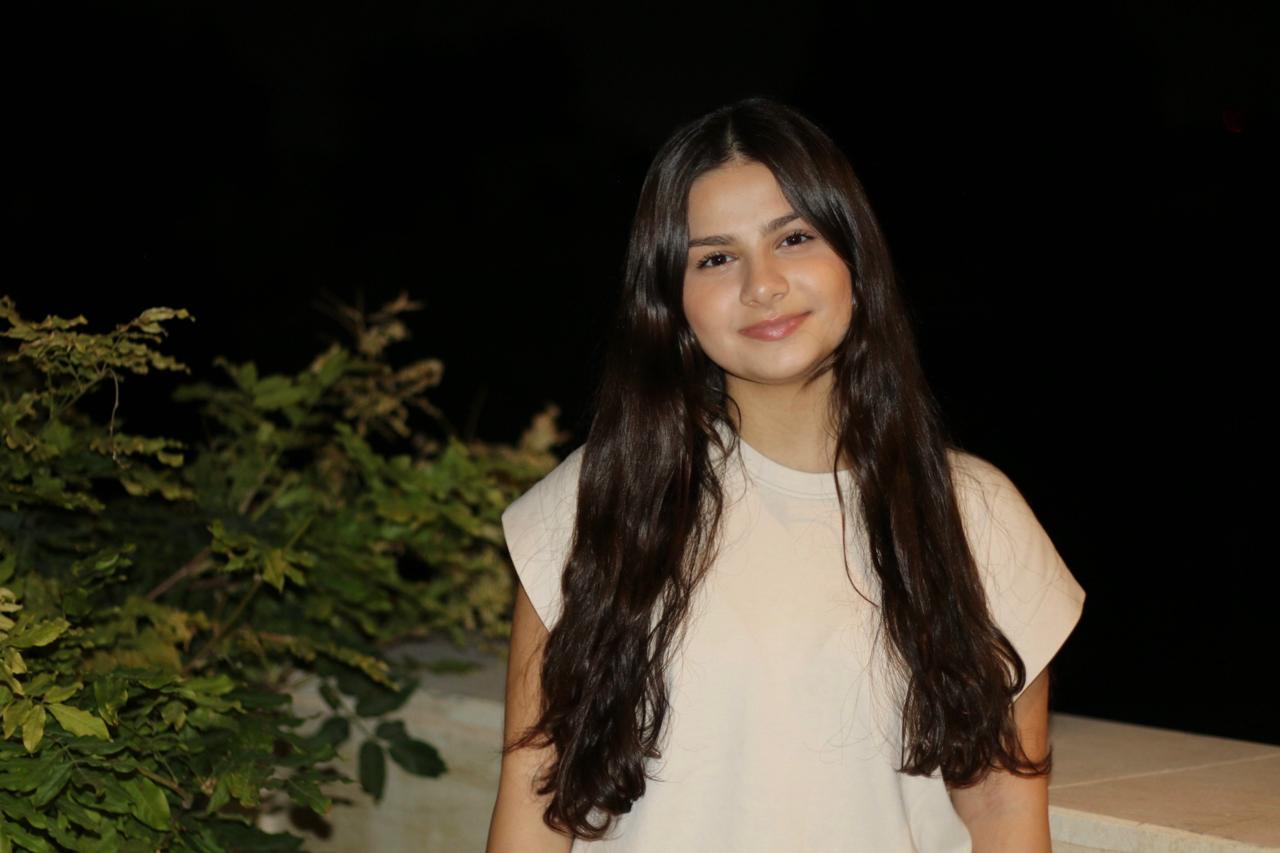
Lilyan Abu Soufeh (she/her) is a Jordanian youth ocean advocate and aspiring marine biologist driven by a deep interest in marine ecosystems, conservation, and environmental education. Growing up in Jordan, her connection to the ocean has been shaped by the Red Sea and the ecosystems of the Gulf of Aqaba. She believes that protecting the ocean begins with understanding it, and that young people cannot be expected to protect something they have never had the opportunity to know and love.
Lilyan’s work combines scientific research with conservation. She developed the Recycled Fishing Line Reef Shield Protocol, a coral restoration framework submitted to GEEP’s Youth Innovation Challenge, which explores the removal of discarded fishing lines and their repurposing into thermal shading mats for coral reefs. To move the project, she has collaborated with Project Sea, which will provide the discarded fishing lines it collects and coordinate with other local cleanup organizations to support the project’s implementation in the Gulf of Aqaba. She has also developed the Coral Larval Attraction Through Sound and Chemical Cues Funnel, an ISEF-aligned research framework investigating methods of supporting coral larval recruitment.
Her conservation work extends beyond research. Lilyan has participated in cleanup initiatives across Jordan, Egypt, and Istanbul, and serves as an Econest Ambassador, working with the organization on an plastic pollution campaign that has expanded into classrooms across Amman. Through this initiative, she has educated students in Grades 1–6 from schools about plastic pollution and organized PET bottle collection for recycling, helping collect approximately half a ton of plastic bottles through school competitions.
Lilyan is especially passionate about making marine science accessible to younger generations. She is currently authoring a children’s encyclopedia about the Red Sea, inspired by her belief that young people should have the opportunity to know and love their ocean before being asked to protect it. She has participated in marine biodiversity monitoring and survey webinars, including training connected to biodiversity policy and environmental diplomacy.
Beyond her ocean work, Lilyan is a recipient of the IB Global Youth Fund for her educational support of displaced children, including children undergoing cancer treatment. This experience has strengthened her belief that youth leadership can create change both within and beyond environmental work.
Currently studying IB Higher Level Biology and Chemistry with the goal of pursuing marine biology after high school, Lilyan hopes to build a career at the intersection of marine science, conservation, and environmental diplomacy. She wants to turn scientific ideas into practical solutions, make marine knowledge accessible to younger generations, and create opportunities for young people to build their own connection with the ocean.
For Lilyan, the ocean is not simply something to study or protect. It is something people need to understand, experience, and care about. As the saying goes, “People protect what they love, and they love what they know.” She hopes her work can help more young people know their ocean well enough to love it, and love it enough to protect it.