
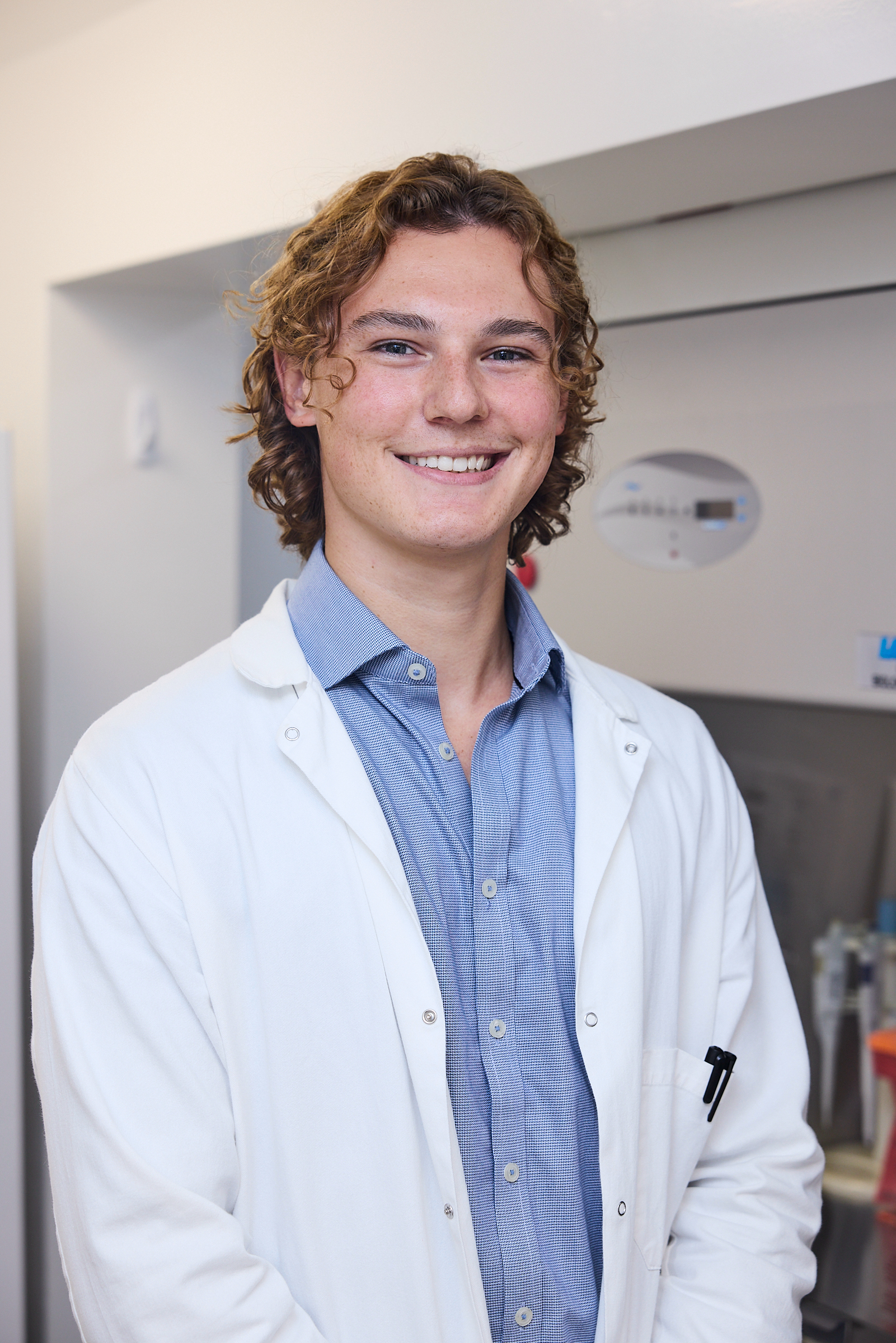
Matthew Nagel (he/him) is a scientist, PADI Divemaster and science communicator with experience across research, conservation and education, and who joins the Council as the first representative from his home, Bermuda.
Growing up in Bermuda, the ocean was all-encompassing, and was both his playground and classroom. From an early age, he was fascinated by the extraordinary abilities of other organisms, pursuing school projects investigating topics such as how corals might adapt to climate change, how echinoderms regenerate lost tissues, and what other biological systems might teach us about ourselves. That curiosity has shaped his education and career ever since. At the Bermuda Institute of Ocean Sciences, he studied gene networks controlling early development in sea urchins and explored pelagic environmental genomics. At University College London, he completed a BSc in Biochemistry with First Class Honours and an MSc in Cell and Gene Therapy with Distinction, during which he worked on an in-utero gene-editing therapy for a rare neurodegenerative disease.
His conservation work began at Waterstart Bermuda, first as a student and later as a Senior Intern and Divemaster, teaching students aged 11 to 17 to dive and about marine science while assisting with ecological projects. He has since worked with the Indo Ocean Project, and in September, he joined Fuvahmulah Shark Lab as an intern, learning from fellow 2026–27 council member Luca Asshauer. Across these opportunities his experiences have included coral restoration, BRUVs and benthic assessments, tiger shark identification, laser photogrammetry and assisting with biopsy collection for metabolic and genomic research.
Matthew has also supported the building of scientific capacity back home. As a Science Consultant to the Bermuda Government Department of Health, he contributed to the development of a whole-genome sequencing programme for antimicrobial-resistance surveillance, from workflow design through implementation, validation and staff training.
In 2025, Matthew represented Bermuda as a youth delegate at the Third United Nations Ocean Conference in Nice through the European Union-funded Green Overseas Programme, joining discussions spanning marine biotechnology, conservation finance, and ocean governance. The experience broadened his understanding of how scientific knowledge becomes policy and the importance of making those conversations accessible beyond the people already in the room.
Matthew is passionate about ensuring that small-island and coastal communities are not simply subjects of environmental research, or recipients of policies made elsewhere, but active participants in shaping the science and decisions that affect their future. For communities already living with the consequences of climate change, ocean degradation, and the exploitation of marine resources, this is not an abstract issue. As a Youth Advisory Council member, he hopes to learn from and contribute to the global community while bringing Bermuda’s perspective, turning scientific knowledge into meaningful advocacy, and amplifying the voices of those already working tirelessly to protect the island’s waters. Above all, he wants more young Bermudians to discover a place for themselves in science and conservation, and to contribute to a sustainable ocean economy that both supports communities and protects the marine ecosystems on which we all rely.