
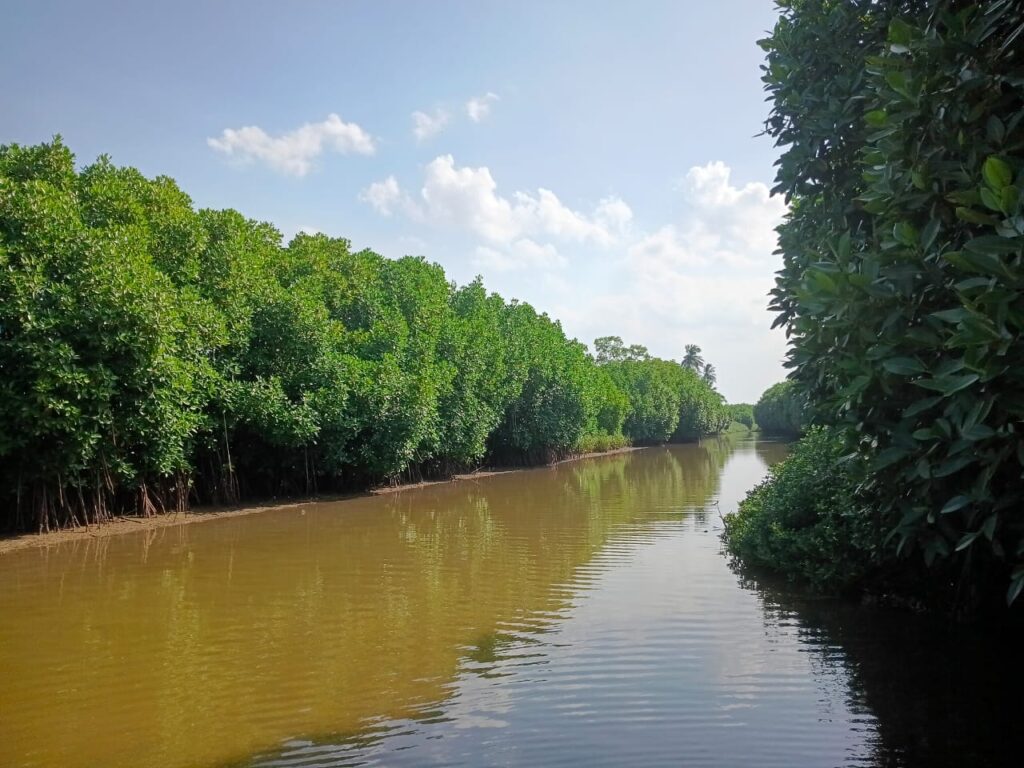
Mangroves, Sand Dunes and the Coastal Lifeline of Cuddalore:
About This Event
A fragile coastal ecosystem under threat
The coastal region surrounding the Uppanar backwater river in Cuddalore district, Tamil Nadu, represents one of the most delicate and ecologically important landscapes along India’s eastern shoreline. Stretching for nearly 15 kilometres parallel to the Bay of Bengal, the Uppanar waterway forms a natural coastal system that supports mangrove forests, marine biodiversity, and the livelihoods of thousands of fishing families.
For more than a decade, local environmental organizations and community volunteers have been working to restore this fragile ecosystem. Among them, Aalamaram NGO, based in Cuddalore and led by environmental activist Arjunan Elayaraja, has been actively engaged in large-scale mangrove restoration and coastal conservation.
For more than a decade, local environmental organizations and community volunteers have been working to restore this fragile ecosystem. Among them, Aalamaram NGO, based in Cuddalore and led by environmental activist Arjunan Elayaraja, has been actively engaged in large-scale mangrove restoration and coastal conservation.
However, recent activities involving deep channel excavation and large-scale sand removal along the Uppanar coastal belt have raised serious environmental concerns. Experts and local communities warn that these actions could dismantle natural coastal defenses that protect the region from flooding, sea erosion, and extreme climate events.
Community-led mangrove restoration along the Uppanar
Since 2010, volunteers from Aalamaram NGO have planted thousands of mangrove saplings along a 15-kilometre stretch of the Uppanar backwater river. Over the years, these saplings have grown into thriving mangrove forests that now play a crucial role in stabilizing the coastal ecosystem.
Mangrove forests serve several essential functions:
● Protecting shorelines from storm surges and sea erosion
● Acting as breeding grounds for fish and marine organisms
● Providing habitat for migratory birds, crabs, shrimp and other species
● Supporting the livelihoods of fishermen who depend on coastal fisheries
These mangrove ecosystems have gradually restored a previously damaged coastal environment and now serve as an ecological shield for nearby areas, including the SIPCOT industrial region in Cuddalore.
The mangrove restoration efforts have also transformed the Uppanar coastal landscape into an emerging ecological zone similar to the famous Pichavaram mangrove forests near Chidambaram.
Sand dunes: the coast’s invisible protective wall
While mangroves play a crucial ecological role, sand dunes are equally important natural barriers along the coastline.
Sand dunes are formed naturally over decades through the interaction of wind, vegetation, and coastal sediment. These dunes serve as a protective wall between the sea and inland villages.
Their environmental functions include:
● Preventing sea water intrusion into inland areasDestroying these systems in favour of large-s
● Absorbing the impact of waves and storm surges
● Protecting coastal villages from flooding
● Supporting coastal vegetation and biodiversity
● Maintaining natural drainage of rainwater
In coastal fishing villages such as Thiruchopuram, Periyakuppam, and Nayinaikuppam, sand dunes have historically protected communities from extreme coastal events.
These natural formations are particularly vital during heavy monsoon rains and cyclones, when they prevent seawater from flooding inland settlements.
A coastline still recovering from the 2004 tsunami
The importance of these natural barriers became painfully evident during the 2004 Indian Ocean tsunami, which devastated several coastal districts in Tamil Nadu, including Cuddalore.
Many coastal villages in the Uppanar region were severely affected by the disaster. The tragedy highlighted the critical importance of natural protective systems such as mangrove forests and sand dunes.
Since then, environmental experts have repeatedly emphasized that tsunami-affected coastal areas must be protected through ecological restoration rather than disruptive development projects.
The controversial channel-digging project
Despite these concerns, a government project has been initiated to dig a deep channel—approximately 30 feet deep—connecting the Uppanar backwaters directly to the sea.
According to environmental groups and local activists, this project involves the large-scale removal of sand dunes along the coastal belt.
Critics argue that the excavation process is destroying natural sand barriers that have protected coastal villages for decades. Large quantities of sand are reportedly being removed from areas between Thiruchopuram, Periyakuppam, and Nayinaikuppam, fundamentally altering the natural coastal landscape.
Environmentalists warn that removing sand dunes in this manner goes against natural coastal protection mechanisms.
Concerns about environmental governance
Another major concern ra