
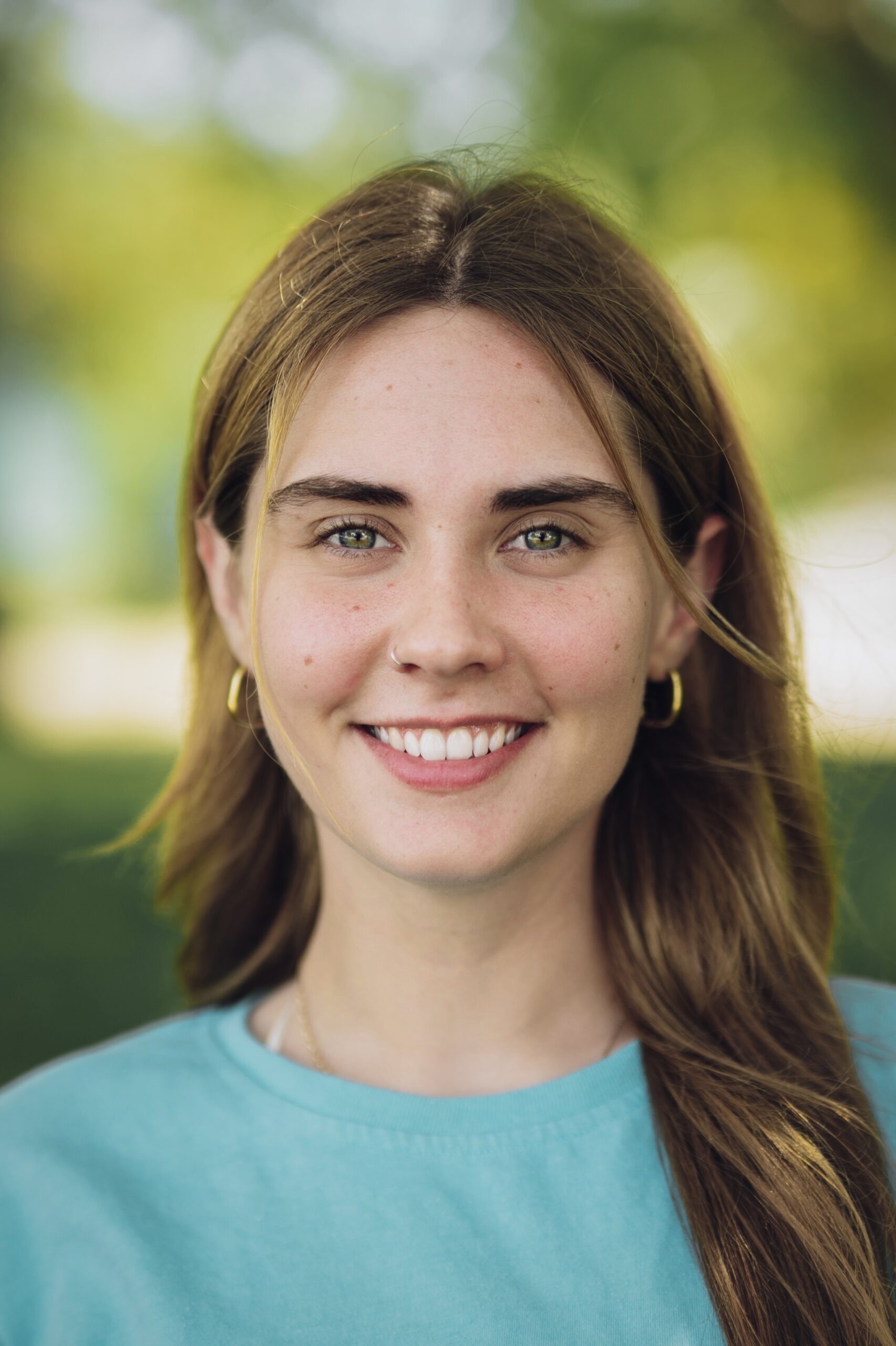
Luca (she/her) is a 25-year-old marine biologist and shark ecologist from Germany. From an early age, she was drawn to the sea, often expressing her fascination through drawing and painting the ocean and its wildlife, while living far from the coast. At 17, she moved to Fiji for a Shark Conservation Project, where her first experiences working underwater introduced her to tropical marine ecosystems and the pressures they face. Her days included diving with bull sharks, conducting BRUV surveys, working with mangroves and shark tagging. These early experiences shaped a passion that has since grown into a career dedicated to shark research and conservation.
After her bachelor’s degree, she worked in deep-sea research, focusing on abiogenic processes at hydrothermal vents and their relevance to questions surrounding the origin of life at the Institute of Molecular Evolution in Duesseldorf. During her master’s studies at the University of Bremen, she gained experience across marine ecology, environmental DNA and fieldwork aboard the research vessel RV SONNE. Her master’s thesis investigated the social structure of Fuvahmulah’s tiger shark aggregation and explored how tourism and predictable food provisioning may influence their behaviour, laying the foundation for her continued research into human influences on shark ecology.
Alongside her academic work, she became increasingly involved in shark conservation and science communication. Through ElasmOcean e.V., she visited schools and kindergartens to introduce younger audiences to marine science and shark conservation and became involved in the Stop Finning EU initiative, including advocacy work at the European Parliament.
She now lives and works in Fuvahmulah in the southern Maldives, where she is Lead Scientist and Research Manager with Pelagic Divers Fuvahmulah and Nature Friends of Maldives, a Maldivian NGO dedicated to researching and conserving elasmobranchs in Maldivian waters. She is the island’s first female resident marine biologist and leads research projects on several shark species. As a PADI Divemaster with hundreds of dives alongside sharks, she combines extensive time in the water with scientific research, developing a deeply personal understanding of these animals. Her research combines photo-identification, health assessments, behavioural observations, social studies, pregnancy monitoring, tagging, genetic analyses and environmental data. Much of this work is built around long-term observation and community involvement, recognising the important role local divers, guides and communities can play in generating scientific knowledge and monitoring marine ecosystems.
She is particularly interested in the relationship between tourism, human activities and shark ecology. Her work focuses on how predictable food provisioning may influence tiger shark movement, residency and foraging ecology, while contributing to conservation outcomes. In 2026, she established STRIPE, the first long-term non-lethal shark tissue sampling initiative in the Maldives, investigating tiger shark population ecology, diet and genetic connectivity.
Beyond research, Luca is passionate about making marine science accessible through education, art and visual storytelling. In 2025, she founded the Fuvahmulah Shark Lab, bringing marine science, shark ecology and research methods into local schools through interactive activities, experiments and field-based learning. As an artist and illustrator, she uses visual storytelling to communicate marine science and make complex scientific ideas accessible to wider audiences.
Her goal is to use science, education and art to better understand sharks and their ecosystems, while helping build a future in which local communities, researchers and the next generation can actively participate in protecting the ocean.