
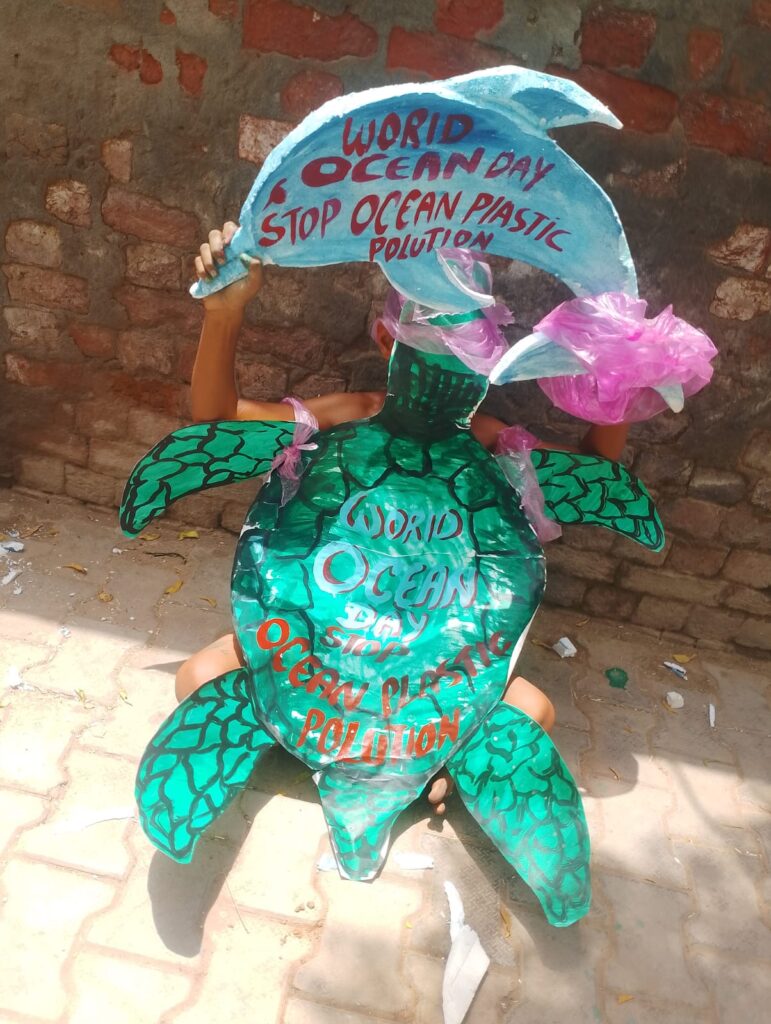
Live performing art
About This Event
“Art for the Oceans: Environmental Artist Hariom Bawa Leads Powerful World Ocean Day Awareness Campaign Against Plastic Pollution”
By Special Correspondent
Bhiwani, Haryana, India
On the occasion of World Ocean Day, a unique environmental awareness campaign emerged from the heartland of Haryana, carrying a global message for ocean conservation. International environmental awareness artist Hariom Bawa from Bhiwani, Haryana, used creative art and live awareness activities to spread an urgent message: “Stop Ocean Plastic Pollution.” Although living far from coastlines and oceans, artist Hariom Bawa believes environmental responsibility has no geographical boundaries. Through sculpture, performance art, and awareness activities, he highlighted one of the biggest global environmental crises — plastic pollution in oceans and its devastating impact on marine biodiversity. This year’s special awareness initiative included participation from child artist Sameer Sunsuna, who played an important role in presenting the emotional connection between humans and marine life. Together, they transformed environmental concern into a creative movement, reminding people that every plastic wrapper thrown away carelessly can travel beyond cities and villages and eventually reach rivers and oceans.
A Creative Campaign with a Global Message The campaign centered around a powerful artistic presentation depicting marine creatures trapped in plastic waste. Through handmade eco-friendly sculptures and symbolic art forms, Hariom Bawa visually demonstrated how human negligence silently kills marine ecosystems.
The central message of the campaign was simple yet powerful:
“The ocean gives life to humanity; humanity must protect the ocean.”
Using recycled materials and eco-friendly artistic methods, Bawa created awareness installations showing turtles entangled in plastic nets, dolphins surrounded by bottles, fish consuming microplastics, and seabirds struggling among waste.
Child artist Sameer Sunsuna emotionally portrayed the role of future generations, symbolizing how today’s environmental decisions will shape tomorrow’s planet.
Why Ocean Pollution Matters to Everyone
Many people living away from coastal regions often believe ocean pollution is someone else’s problem. Artist Hariom Bawa challenged this mindset.
During the awareness event, he explained that plastic discarded in streets, drains, rivers, ponds, and canals ultimately travels toward larger water systems and finally enters oceans. A single bottle discarded irresponsibly may remain in the environment for hundreds of years. “Oceans are not far away from us. Every river connects to them. Every piece of waste thrown carelessly eventually reaches marine ecosystems,” he shared during the awareness drive.His campaign stressed that environmental responsibility starts from homes, schools, villages, and local communities.
The Silent Victims: Marine Animals
One of the strongest parts of the campaign focused on marine species that suffer because of plastic waste.Hariom Bawa explained that countless marine creatures mistake plastic for food or become trapped inside waste materials. These invisible tragedies occur daily beneath ocean surfaces.
Species highlighted during the campaign included:
Turtles swallowing plastic bags thinking they are jellyfish
Dolphins trapped in fishing waste
Fish consuming microplastics
Octopuses losing habitat due to pollution
Seahorses affected by habitat destruction
Seabirds dying from stomachs filled with plastic waste
Rare marine species facing extinction risks
Large artistic displays showed how plastic fragments accumulate inside marine organisms and gradually move through the food chain, eventually affecting humans as well.
The campaign repeatedly emphasized:
“When oceans suffer, humanity suffers.”
Plastic: The Biggest Enemy of Oceans
According to the awareness message presented by the artists, plastic pollution has become one of the greatest threats facing marine ecosystems.
Items commonly discarded during tourism activities were highlighted:
Chips wrappers
Water bottles
Plastic cups
Food packaging
Disposable cutlery
Beverage cans
Carry bags
Party waste
Hariom Bawa specifically addressed tourists and beach visitors:
People visit beaches for happiness and memories, but often leave behind waste that becomes death for marine creatures.”
The campaign appealed to travelers, tourists, and families to carry back their waste instead of leaving it behind.
Role of Child Artist Sameer Sunsuna
A unique aspect of the event was the involvement of child artist Sameer Sunsuna.
Through performance activities and environmental expressions, Sameer represented the voice of future generations asking adults to act responsibly.
Holding awareness placards and participating in symbolic performances, he delivered a message:
“Protect oceans today so children can inherit a living planet tomorrow.